Most pain isn’t where it hurts. It’s where the body stopped working properly.
I don’t chase symptoms. I look at how your muscles, joints, and nervous system are working together. When certain muscles stop doing their job, the body compensates — and that’s what leads to pain, tightness, and recurring issues.
What this looks like in practice:
Every session starts with figuring out what your body is actually doing — not guessing and not chasing pain.
I don’t assume where the problem is. I test muscle function, joint stability, and how your body responds under load. When certain muscles aren’t firing properly, your body compensates — and that’s where pain, tightness, and breakdown begin.
Once we know what’s not working, we fix that first.
The process is simple and intentional:
Fix the foundation first
Move with intention
Build strength that lasts
Focus on what the body needs, not what’s trendy
Many cases of muscle tightness and joint pain are not caused by shortened muscles or a lack of flexibility.
They occur when specific muscles stop activating efficiently, creating instability and forcing the body to compensate. Over time, these compensation patterns lead to pain, stiffness, and recurring dysfunction — even after traditional treatment.
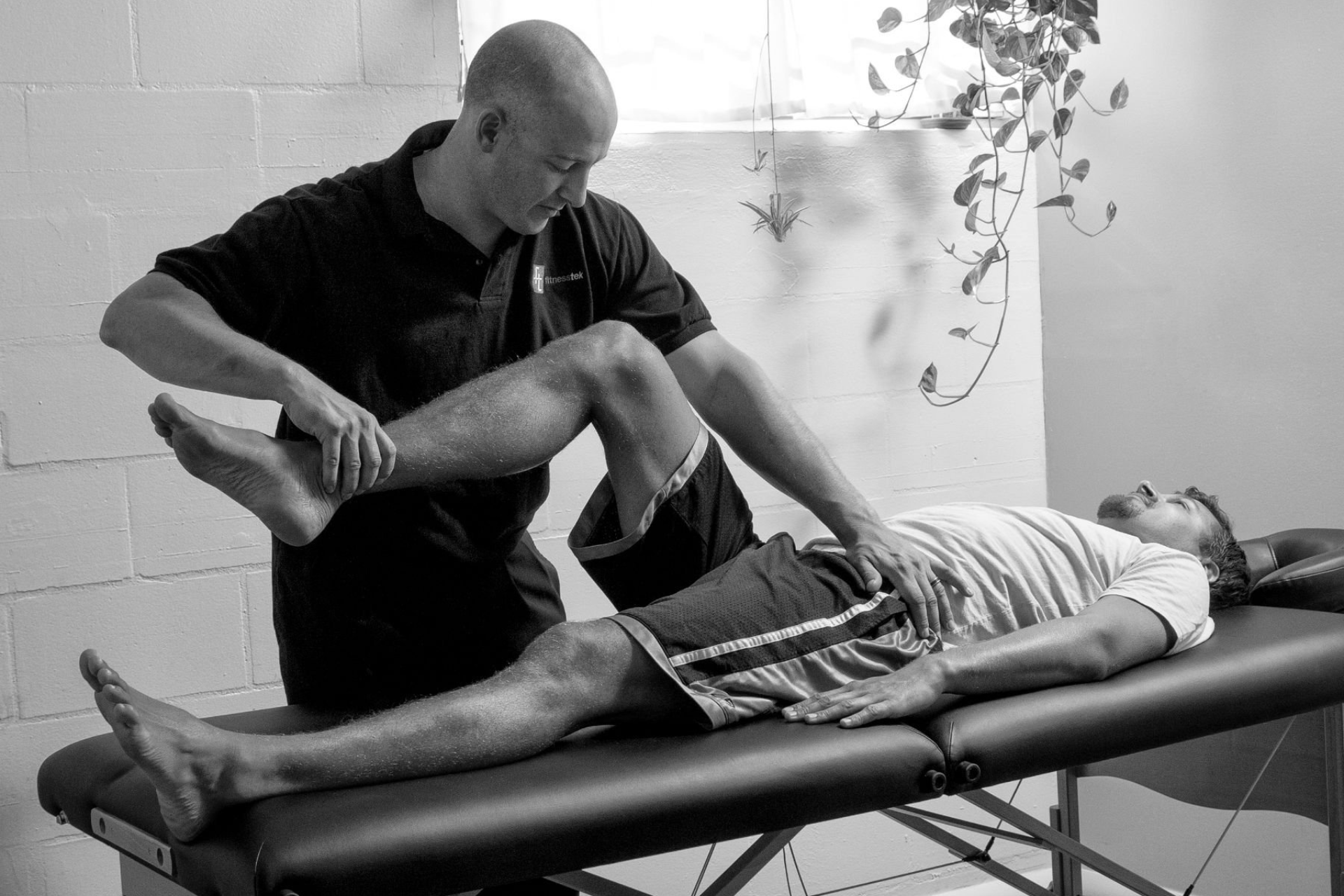
I use Muscle Activation Techniques® (MAT) as a primary tool, along with other neuromuscular techniques, to evaluate and restore proper muscle function.
MAT is a systematic process used to identify inhibited or underperforming muscles that compromise joint stability and movement efficiency. When muscles fail to contribute appropriately, the body increases tension elsewhere — often presenting as muscle tightness, limited mobility, or joint pain.
Restore proper muscle firing
Improve joint stability and control
Reduce compensatory muscle tightness
Increase usable strength without excessive load
MAT is not stretching or massage. It addresses the neurological cause of dysfunction, not just the symptoms.
Each session begins with a detailed assessment of joint motion, muscular response, and movement control.
Based on these findings, I apply the appropriate neuromuscular strategies and follow them with corrective exercise to reinforce the changes. This ensures restored muscle function is maintained during daily activity, training, and sport — leading to more durable, long-term results.
I work with adults experiencing chronic or recurring joint pain, persistent muscle tightness, and individuals who have not achieved lasting results through traditional approaches.
I also work with active individuals and athletes seeking improved performance, durability, and long-term movement health.
The goal is simple: restore proper neuromuscular function so your body can move efficiently, produce strength with confidence, and function without ongoing pain.